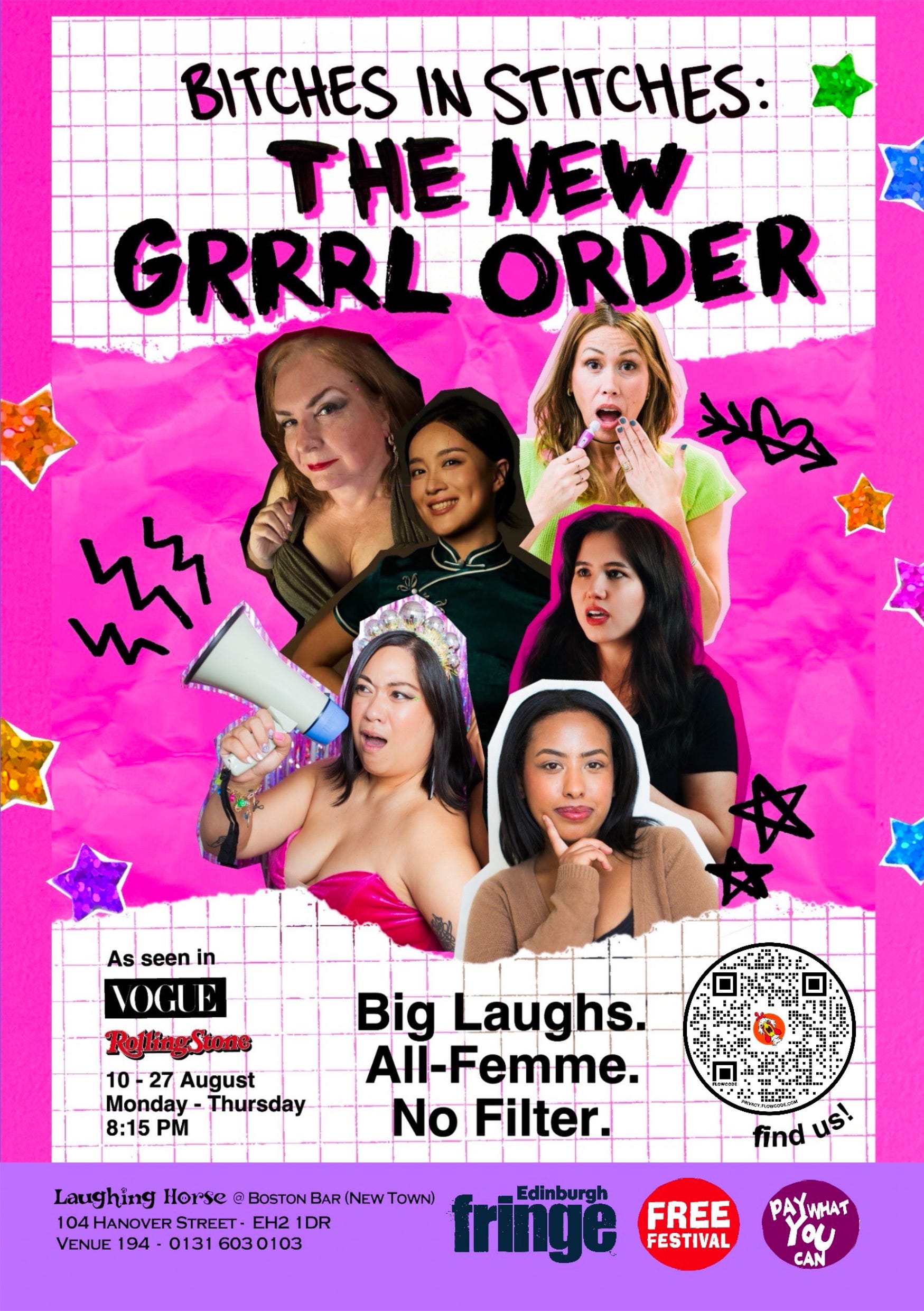
How We Turned Cutting Bangs Into a Teaser Campaign for Our Edinburgh Fringe Run
A breakdown, but make it a launch strategy.

Women in comedy are not okay.
Which is the kind of sentence that many male comedians will hear and immediately translate as: women are not cut out to do stand-up. We’re too sensitive, too humourless, too easily offended.
Those brochahos need to take several damn seats. Let me be clear — it’s not because we’re fragile or can’t take a joke. And it isn’t because we need comedy to be cleaner, nicer, or softer.
We are not okay because the world keeps giving us reasons not to be — and then asking us to be more palatable about it.
Women’s rights are being rolled back across the globe. The manosphere keeps leaking into mainstream culture like a herpes outbreak with a podcast mic. Comedy rooms still reward men who confuse punching down with being edgy. And online, we’re all being sold endless ways to become hotter, calmer, richer, thinner, smoother, more productive, more desirable, more detached, more optimised — as if the answer to a hostile world is to become less human inside it.
Bitches in Stitches has never been about that. So while public discourse is being dominated by this unhealthy obsession with optimisation, we’ve decided to tell that culture to really, authentically, and truly fuck off.
Fuck looksmaxxing and “ascending.” We’re going to be ugly and spiral.
The bangs were the bit. The breakdown was the strategy.
Sometimes, the most honest response to a broken culture is to pick up a pair of scissors.
Instead of sanding ourselves down before we’re allowed to be seen, Bitches in Stitches is building a room where women, femmes and thems can be messy, filthy, sharp, strange, vulnerable, too much — and actually funny on our own terms.
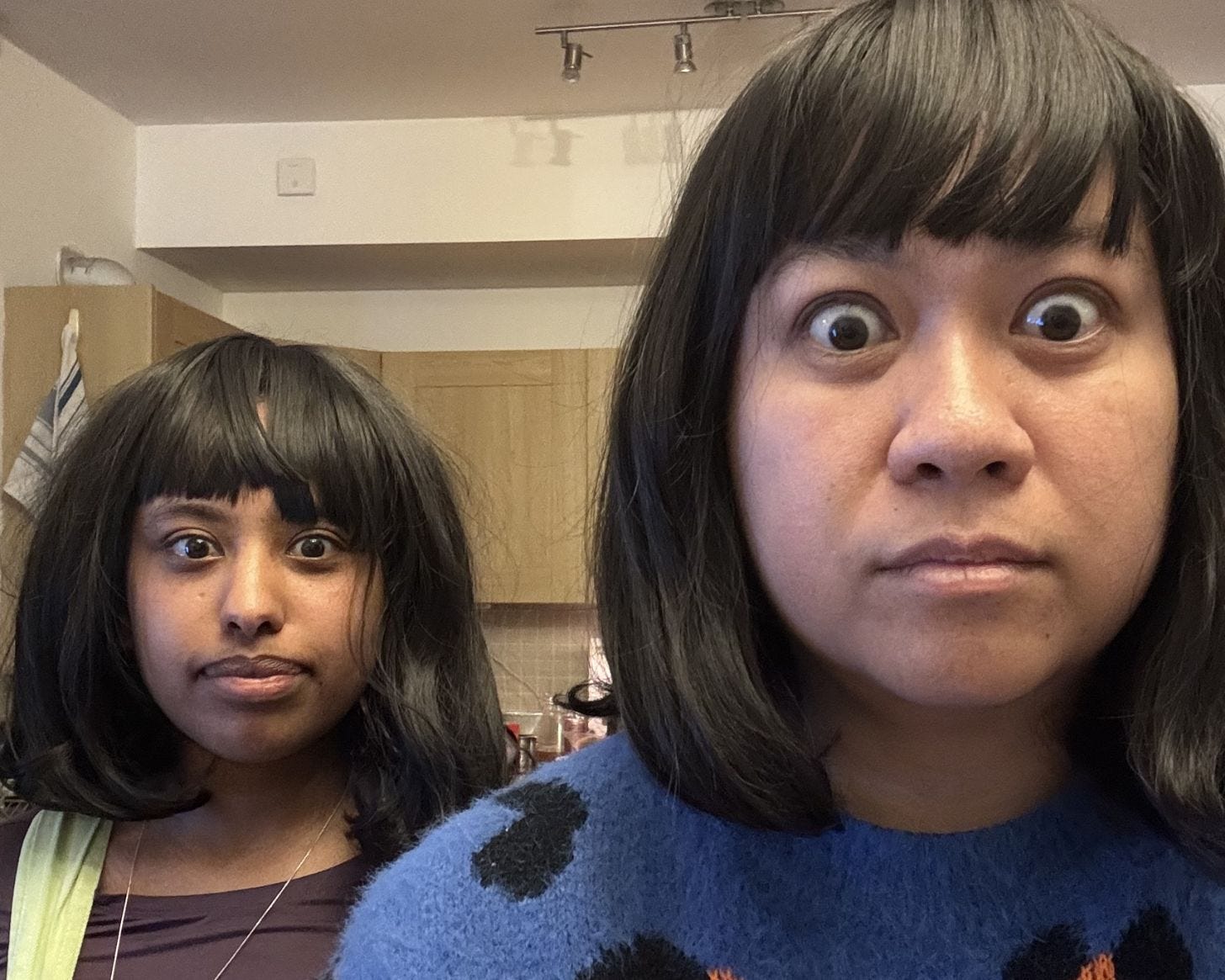
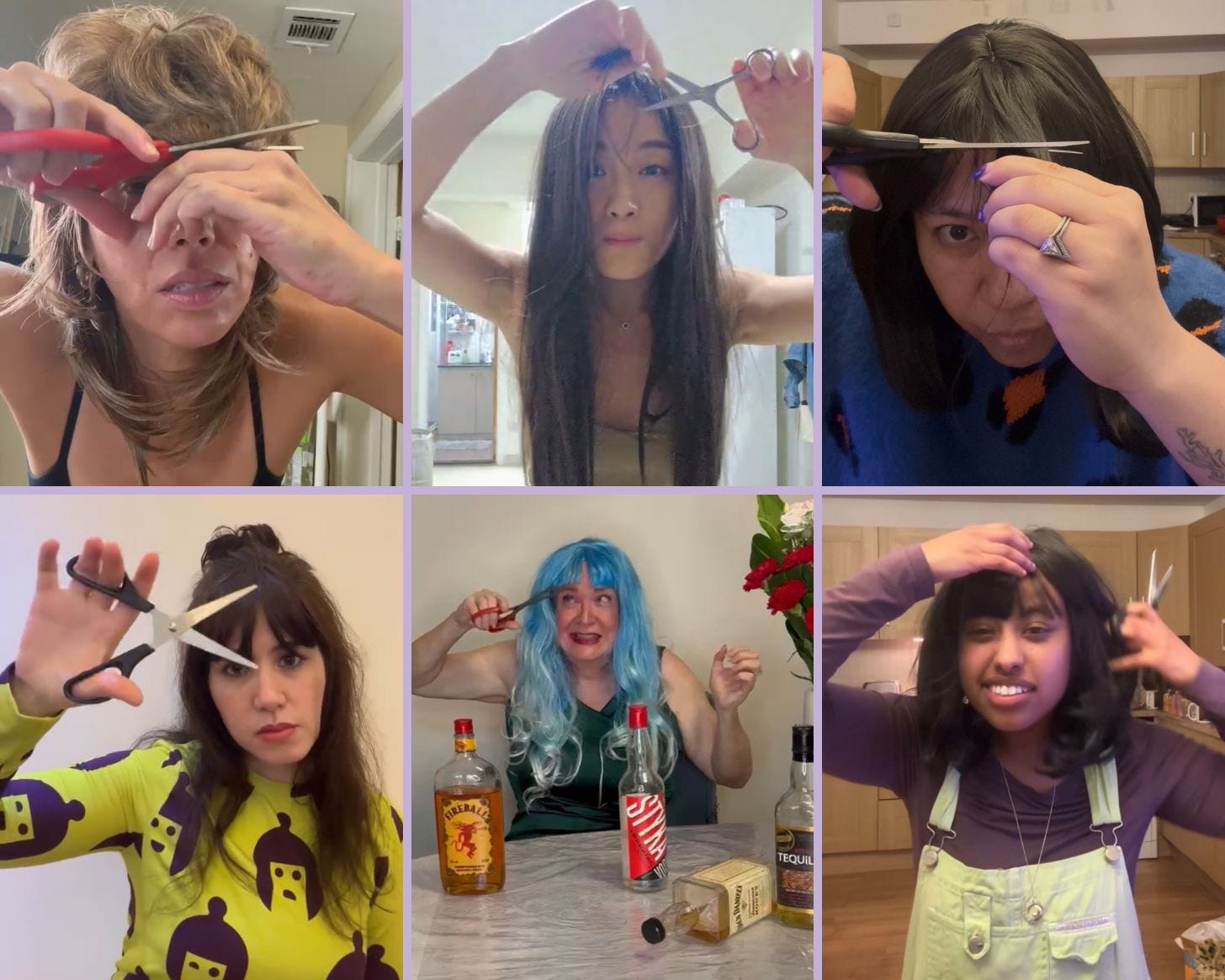
In April, six of us around the world posted Instagram reels of cutting our own bangs, to soft launch our debut at Edinburgh Fringe in August.
The idea came from Alix Brown, one of the comics on our lineup, who pointed out something painfully obvious to anyone who can make the distinction between British and American English: “fringe” means bangs.
A Fringe show. A fake fringe. A group of women in comedy visibly losing the plot.
The pun was so fucking stupid. Which meant it was perfect.
We posted six reels over the next few weeks, each featuring a comedian on our lineup giving herself an unfortunate haircut on camera. Not glamorous salon-style bangs. Not even the edgy, DIY home haircuts that suddenly make a manic pixie dreamgirl fuckable. No wolf cut with edgy layers. We went for the full, 2am mirror-stare, “I’m fine,” group-chat-intervention bangs.
A disclaimer: Don’t worry, they weren’t our actual bangs, just wigs or clip-ons. No one’s real hair was harmed in the making of this campaign.
But emotionally… it felt very real.
The videos worked because cutting your own bangs is one of those instantly recognisable femme-coded gestures that says everything without an explainer: I am spiralling. I am taking control. I may regret this. Someone should probably check on me.
Which, incidentally, is also the emotional register of taking a global femme/them comedy collective to Edinburgh Fringe.
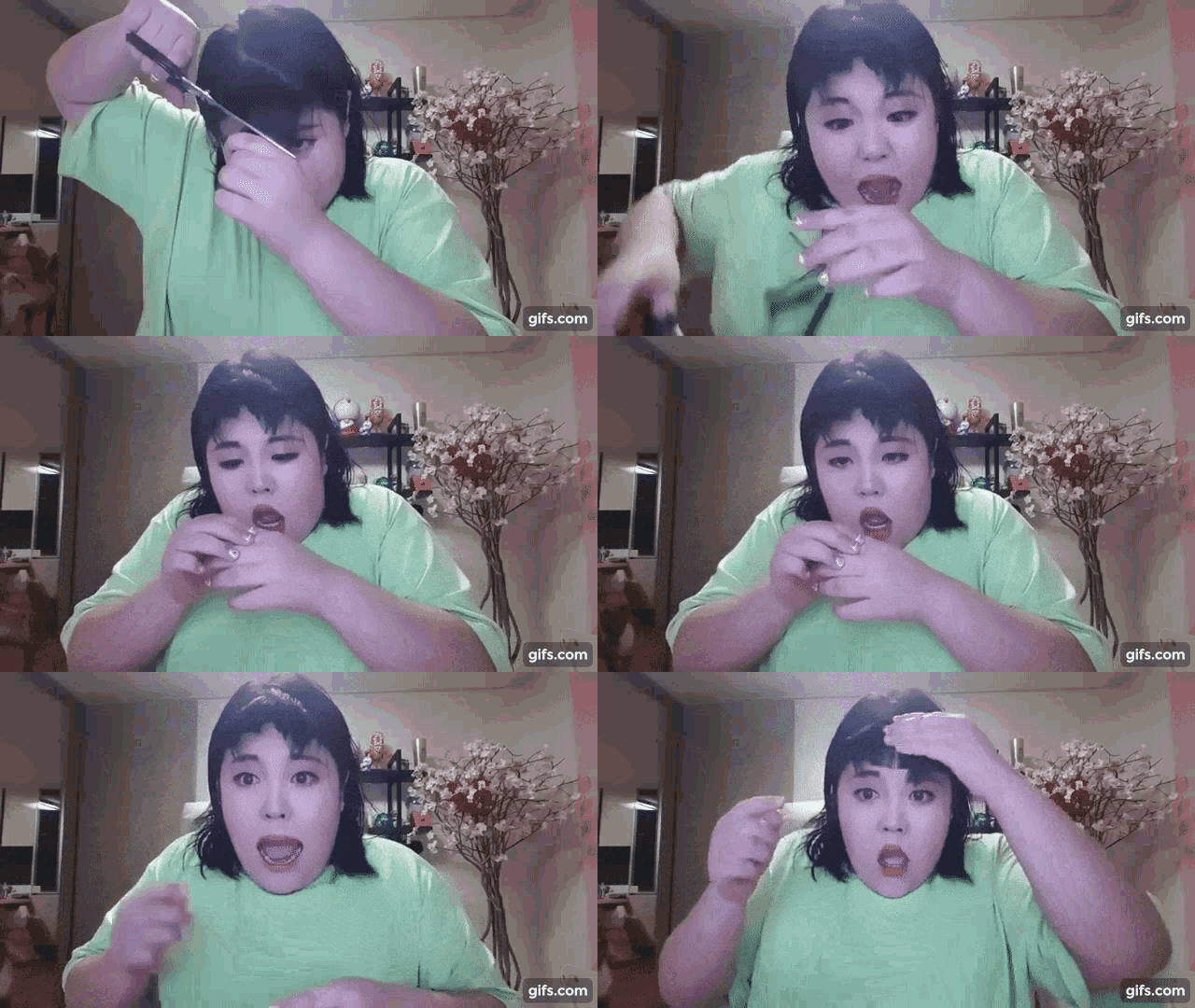
This teaser campaign let us turn the feeling behind our show, Bitches in Stitches: The New Grrrl Order, into something visual, repeatable and shareable. Before we said the words “Edinburgh Fringe,” we gave people the mood: funny, frantic, feminine-coded, unravelling slightly, and deeply committed to the bit.
Our top teaser reel reached more than 12,000 views, with several others landing between roughly 1,700 and 4,800 views. For a grassroots comedy collective promoting an unfunded Fringe run without a giant ad budget, that mattered.
Not because views automatically equal ticket sales. But because attention is the first conversion.
Delulu is the solulu
Edinburgh Fringe is not a place where you can simply announce a show and assume anyone will notice.
Last year, there were over 3,000 comedy shows at the festival alone — which is thrilling if you love stand-up gigs, but a total ballache if you are trying to promote your own.
For us, the stakes were not casual. We had performers flying in from the US, Hong Kong and Taiwan. Our international collective was converging in one city for a show that, for the first time, would have Bitches in Stitches members from each of our chapters sharing a stage. We had months of planning, travel, accommodation, admin and emotional labour to produce one hour of comedy at the world’s biggest performing arts festival.
So the question was not just:
How do we announce our Fringe run?
It was:
How do we make people care before we ask them to?
We had one shot to make the show feel distinctive, or risk it getting lost in the programme pages and spend three weeks performing to an empty room.
So we started with a collective breakdown.
Context converts
A good story moves people to action, and data often fails to do this alone.
Ann Kim, Senior Portfolio Director at IDEO, says, “Part of what storytelling allows you to do is get to the why behind the data and provide what it means experientially for people.”
Storytelling expert Jennifer Aaker of Stanford Graduate School of Business is widely cited as saying that information woven into a narrative can be remembered “up to 22 times more” than facts alone.
That’s why Bitches in Stitches started teasing our show before we officially announced it. We didn’t want the big reveal to fall flat because no one was paying attention. So we built a visual world around a shared joke and recognisable emotional hook before we even dropped any specific info.
Of course, that information matters. But it’s not what attracts interest.
If we had opened with “Bitches in Stitches: The New Grrrl Order, 10–27 August, Boston Bar, 8:15pm,” technically all the information would have been there. But the emotional context would not.
Before we asked people to book, share or care, we needed them to understand the promise of the show:
Come for the comedy.
Stay for the community.
Sit up front.
Laugh like you mean it.
Be your messiest, truest, funniest self for an hour.
No apologies. No optimisation. No pretending you are fine.
Did it actually work, though?
The campaign did what we needed it to do: it got thousands of people watching before we asked them to buy a ticket.
But for me, the win was not just the numbers. It was the feeling that by the time we announced The New Grrrl Order, we wouldn’t shouting into the void. We’d already built a visual pattern to communicate a cultural insight. People had already been laughing with us, worrying about our life fake hair choices, and slowly piecing together the joke.
They were in on the bit before they were asked to buy into the show.
And that, really, was the point.
In the end, the campaign was never actually about hair.
It were about the moment when staying composed stops working. The group chat intervention. The fake “I’m fine.” The urge to leave the house, leave town, or leave behind the version of yourself that has been trying too hard to be acceptable.
That is what we wanted our Fringe campaign to feel like: not a polished announcement, but an invitation to come undone in good company.
Because Bitches in Stitches has never been about proving that women, femmes and thems can be funny.
We already know that.
It’s about building rooms for which we do not have to shrink ourselves as rent to occupy that space. Rooms where the jokes can be filthy, sharp, strange and chaotic without anyone’s identity becoming the punchline. Rooms where the laugh brings people in instead of pushing them out.
The haircuts were fake. The strategy was real. And the need behind it was even realer.
So if the world is telling you to optimise, ascend, calm down, glow up, detach, behave, or become more palatable before you’re allowed to be seen… then, respectfully:
fuck that.
If that sounds like your kind of spiral, come find us in Edinburgh this August.
Bitches in Stitches: The New Grrrl Order runs 10–27 August, Monday–Thursday, 8:15pm at Boston Bar, New Town.
Sit up front.
Laugh like you mean it.
Fake bangs optional.
Your most amazing, unhinged summer begins with a Fringe.